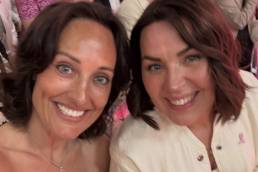

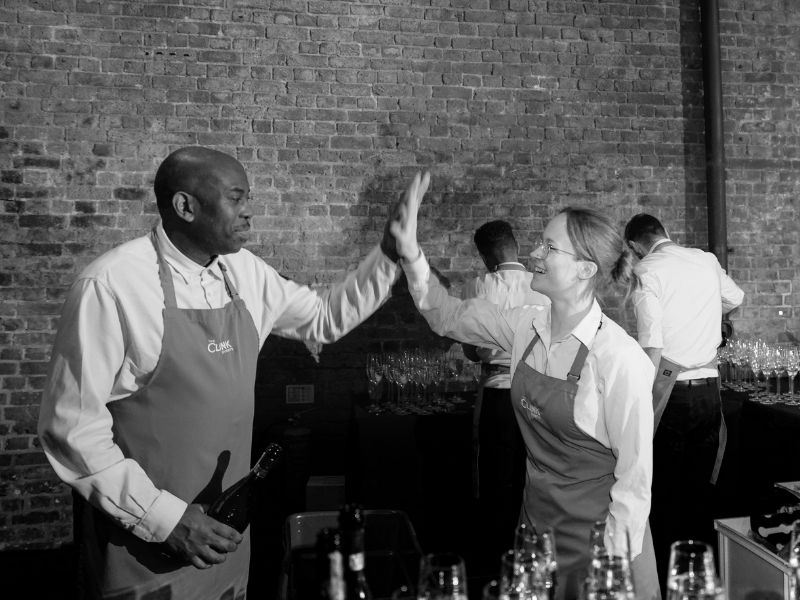
Building strong relationships, delivering memorable events and creating opportunities have all played a role in the growth of Clink Events over recent years.
We spoke with Lizzie about the organisation’s journey, what she has learned from the events industry and the values that continue to guide its success.
You’ve been part of Clink Events from the beginning. How has the business evolved since those early days?
Since the early days of 2018 when I joined Clink Events, we were listed as an accredited caterer in 3 venues in London. Now in the middle of 2026, this has grown to 27 venues which illustrates our remarkable success and we are delighted that these are some of the most renowned and iconic venues in London – including the Science Museum, Design Museum, Kew Gardens, Mall Galleries, V&A East Storehouse, Westminster Abbey, St Paul’s Cathedral, Guildhall, Royal Museums Greenwich and Indigo O2.
The charity has also evolved with two further training projects; the Clink Bakery Bakery – The Clink Charity and a new community project – The Clink Training Café. The training café also located in Herne Hill, marks a shift towards providing young people with the resources and opportunities they need to avoid the criminal justice system in the first place. The café is a vibrant, open-to-the-public business where young people from the local community gain hands-on experience in hospitality, earn industry-recognised qualifications, and receive one-on-one mentoring that supports their personal development.
Our Catered by Clink Home – Catered By Clink also launched last year and we have already seen tremendous success in delivering canapes, finger buffets and Clink Bakery items to venues and offices in London.
As Business Development Manager for Clink Events, what does your role involve day to day?
My daily role involves venue relationship management, developing partnerships with London venues, networking events, completing new venue tenders and identifying new development opportunities. As Clink Events is both a catering company and a social enterprise, it is so important that we talk about our mission; clients are not just booking catering — they are supporting training and employment opportunities for prison leavers and vulnerable young adults.
What have you seen first-hand that reflects the impact of the charity’s work through Clink Events?
What’s stood out to me most is seeing how hospitality can genuinely rebuild confidence and create structure for people who may not have had many opportunities before. Through Clink Events, I’ve seen individuals develop professional skills, communication skills, and a real sense of pride in their work while delivering high-quality events. The training we offer is really life changing.
What has been the most challenging part of growing Clink Events, and what have you taken from that experience?
The most challenging part for me was getting us noticed in the industry and having to ‘prove’ that we provide the same service and quality of food as the larger and (back then) more known caterers in London. Working at Guildhall transformed Clink Events in the early days and has provided us with so many opportunities. Our name is now out in the industry for delivering not only amazing events but also as a social enterprise, helping clients to deliver their corporate social responsibility.
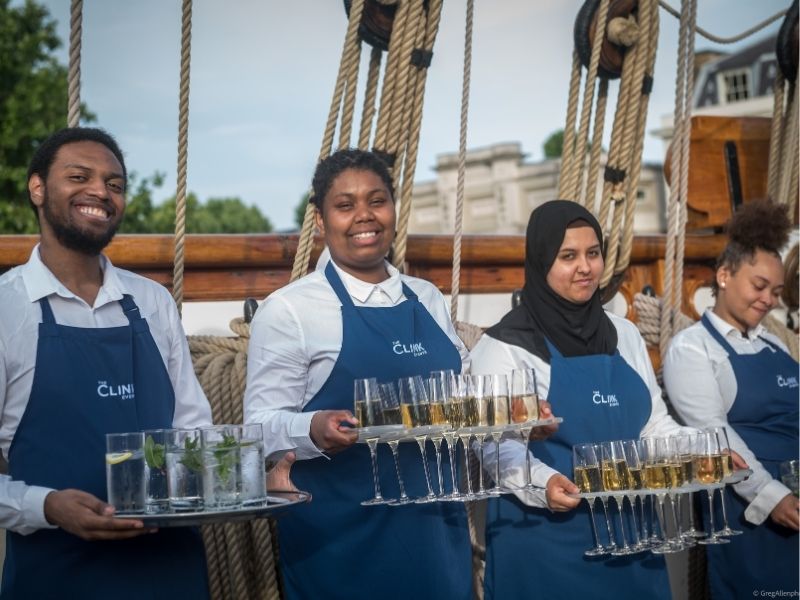
What skills have been most important in helping you grow into this role, and how have you built them over time?
The most important skills for me have been relationship building, communication, adaptability, and commercial awareness. In a business development role, especially within events and hospitality, being able to build trust quickly and understand what clients really need is essential.
I’ve built those skills over time through working directly with customers, managing different personalities and expectations, and learning how to stay calm and solutions-focused in fast-paced environments. Every interaction has helped me become more confident in presenting ideas, handling pressure, and maintaining professional relationships.
I’ve also developed strong organisational skills because events involve a lot of moving parts and tight deadlines. Over time, I’ve learned how important attention to detail and proactive communication are in delivering a smooth client experience.
Another key area has been understanding the balance between commercial success and social impact. What appeals to me about Clink Events is that relationship-building isn’t just about winning business — it’s also about representing a mission that genuinely changes lives. I think that requires empathy, authenticity, and the ability to communicate purpose as well as service quality.
What have you learned about the events industry through your work with Clink Events that you didn’t expect?
One thing that’s really surprised me about the events industry is how much success depends on relationships and trust, not just the event itself. I initially thought the focus would mainly be on logistics and delivery, but I’ve learned that clients remember how you communicate, how you handle pressure, and how confident they feel working with you.
Through Clink Events specifically, I’ve also learned how powerful purpose-driven hospitality can be. I didn’t fully expect clients to connect so strongly with the social impact side of the business, but many genuinely value being part of something meaningful alongside receiving a high-quality service.
For organisations considering working with Clink Events, what would you want them to understand about the value and impact behind the service?
I’d want organisations to understand that with Clink Events they’re getting both a high-quality professional service and the opportunity to create meaningful social impact at the same time.
The value goes beyond delivering a successful event. By working with Clink Events, organisations are helping support training, employment pathways, and rehabilitation opportunities for people who are rebuilding their lives. That creates a wider positive impact on individuals, families, and communities.
What’s especially important is that the social mission never compromises the standard of service. Clients still expect professionalism, reliability, creativity, and attention to detail — and that’s exactly what they receive. In many ways, the mission actually strengthens the experience because there’s a real sense of pride, purpose, and commitment behind the work.
What does the next phase of Clink Events look like from your perspective, and where do you see the focus as the business continues to grow?
The next phase of Clink Events will see us continuing to grow into new venues and to increase the volume of business that we deliver in our existing ones.