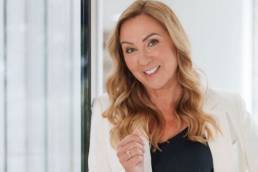

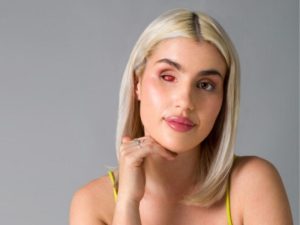
Olivia Deane is a disability awareness speaker, model and public advocate for visible differences, known for using her experience of retinoblastoma and living with a prosthetic eye to challenge narrow ideas of beauty, confidence and representation.
Her work spans modelling, media advocacy and awareness around early detection, body image and appearance diversity.
Her interview explores why normalising visible difference matters, how media representation can shape confidence, and where brands still fall short when inclusion is treated as a box-ticking exercise. Olivia speaks openly about disability, prosthetic-eye confidence and why accessibility must be considered beyond campaigns and photoshoots.
In this exclusive interview with the London Keynote Speakers Agency, Olivia Deane discusses visible difference, disability inclusion, media representation and how personal struggle can become a source of confidence, purpose and change.
Why does normalising visible difference matter when society still tends to present such a narrow idea of what is “normal”?
I think it’s important to normalise visible disabilities in society because it is so relatable. The stereotypical model or person out there is not the norm for everybody.
This is what we’re living every day. People with disabilities, this is our normal. I know there’s not one person in this world that’s the same. Everybody is different. Whether that’s a disability, whether that’s something small, different haircuts, different clothing or different taste in music. Everybody is just so different.
That’s why it’s important to put that out there because it is so normal.
Representation is often discussed in terms of visibility, but what does meaningful representation in media mean to you personally?
Representation in media means so much to me. I think it’s really important to influence something out there for somebody. Everyone can be influenced and everyone can influence. It’s important how you do it because social media nowadays can be such a good place.
Actually, it’s sometimes my escape. I like to post what I feel out on social media, and my mum will sometimes say, “Oh, I didn’t know you were feeling like that.” I’ll post it out there because that’s my comfort.
However, it can go the opposite way and it can be quite toxic, and you can compare yourself, especially if you compare yourself with other influencers or you’re like, I’m not like that. I can’t relate.
I think it’s so important to influence something relatable to so many people. Not everyone’s going to influence you, but they could influence somebody else.
I definitely think it’s important to influence good things and make a difference. That’s what influencing is, making a change and actually having a good influence on somebody.
I think it’s massively important to me, but it’s just how it’s done. As long as it’s done in a good manner and you’re having the best interest in people, that’s the most important thing.
Brands increasingly talk about inclusion and body image, but where do you think they still fall short in practice?
I think brands can definitely do better with the stigma around body image. It’s definitely getting better and you do see more models with disabilities and differences, and more plus-size girls, which I think is incredible.
Again, it’s going back to being relatable, for everybody to relate, because all of our bodies are so different. However, I do think there’s still a massive gap in the whole brand industry because there’s a difference between wanting to use somebody and to have somebody with a disability or differences to model for you, rather than having to use them because you feel like you just need to have somebody or a model with a disability.
I’ve seen events. I’ll see brands that have models who have disabilities, and I think it’s incredible, and then do an event where they don’t have accessible facilities for those models.
That’s where the gap is, that it’s not being thought out properly and it’s not being thought about at all. I think that is the problem nowadays.
I’d like to see more brands being totally inclusive and just having all types of different models model for them because they want to, not because they have to.
As long as you keep talking out, and I keep posting who I am and my differences, I feel like hopefully that will help. It’s helping the community, helping work together and helping make the change.
When you speak publicly about visible difference, confidence and resilience, what do you want audiences to take from your story?
From my public speeches, I know not everybody has a physical difference, but I would hope that everybody could walk away taking something from my speech that they can relate to and that can drive them to achieving what they want to achieve.
I don’t just talk about losing my eye and living with a prosthetic eye and how I cope with that. It’s about how I’ve used something that made me so insecure and used my trauma and everything that I thought would hold me back to push me forwards.
I believe that every human being has something they’re possibly struggling with, or have struggled with, or will struggle with, when actually instead of not coming out of that zone and just struggling, to use it in a way that can push you forwards and actually come out of that struggle.
I never thought I would ever get used to living with a prosthetic eye and losing my eye. However, I now have realised that’s pushed me to do things I never thought I would do, and I actually don’t think I would have ever done if I still had both my eyes and hadn’t gone through what I’d been through.
I would hope that people could walk away, if they don’t take something massive from my speech, with at least something little that can help them with their everyday living.
This exclusive interview with Olivia Deane was conducted by Tabish Ali of the Motivational Speakers Agency.