

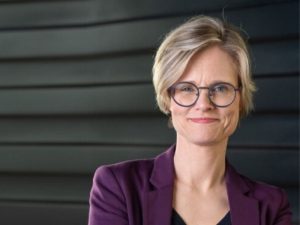
Annick Seys is an organisational behaviour expert, behavioural strategist and award-winning keynote speaker known for helping leaders spot toxic patterns before they damage trust, performance and culture.
Certified as a Functional Analytic Psychotherapy trainer through the University of Washington, she has trained thousands of professionals and works with leaders facing pressure, self-doubt and difficult team dynamics.
Her interview comes as more organisations are being forced to confront behaviour that may deliver short-term results while quietly weakening teams. Annick argues that toxicity often begins with misplaced hope, mixed messages and leaders who focus on outcomes while ignoring the damage behind them.
In this exclusive interview with the Mental Health Speakers Agency, Annick Seys discusses the warning signs leaders ignore, why strong results can hide toxic behaviour, and how organisations can start holding people accountable before unhealthy patterns become part of the culture.
Toxic behaviour in organisations is often visible long before leaders are willing to act on it. What warning signs do business owners tend to miss or ignore?
Even if they know the signs, they’re often ignoring them.
I have so many business leaders who come to me, we talk about toxicity, they see everything I talk about, and they’re still not ready to really see it honestly and act upon it.
The first sign is the relationship usually starts with a strong sense of togetherness, like, you and I, we’re going to change the world. A very strong bond, a very strong understanding, and usually also an amazing start, amazing results. Sales numbers go up, all kinds of challenges are resolved. That’s often the start.
Usually that’s what people want to keep going back to. Why can’t this be amazing again?
What they usually want to ignore are signs of drama happening when they start wanting to hold these people accountable for things that they’ve done. They start talking to them, they start questioning things, and somehow truths become elastic.
They manage to refute arguments, they turn things around, and it makes you very confused. I was there. This is what I came to talk to you about. How has this become a story that I don’t even recognise properly, and somehow you’re blamed for it?
Then it becomes something internal as well. You really take the blame seriously and you’re like, “Maybe this is my fault. Maybe I shouldn’t have come on so strong. Maybe I’ve done something wrong.”
All of that is often entangled in mixed messages. There’s a strong positive message that is mixed into a negative one.
The example is you have parents that tell you all the time, “Please come by. We really miss you. You’re our special girl and we hardly ever see you.” And when you go and they ask how you’re doing and you’re talking about stuff, then the feedback you’re getting back is that you’re not good enough.
Your brain is not able to make that a coherent story. I am your special girl and I have value, or I’m not good enough. But if I’m both, that’s really weird to understand, and to go back to the feeling of togetherness, we tend to go for the I am your special girl.
So in leadership situations, it’s often a situation where you’re called a marvellous leader and inadequate at the same time.
These are signs that you can look for.
Many toxic cultures are allowed to continue because results look strong on the surface. What is the biggest leadership blind spot that allows that to happen?
You could say it’s the togetherness, but it’s actually misplaced hope.
Often people are not looking at behaviour, they’re looking at results. I was at a certain point wondering about it because I had a lot of business owners and managers coming in, and they have really strong values.
They start talking to me about someone being bullied, about themselves suffocating, and they just cannot get back to these values because they’re focused on, yes, but they’re invaluable for the company. We need these people.
And so they slowly get destroyed and disempowered, but they keep going for the results.
When leaders are contributing to the toxic culture themselves, how do you help them recognise that without becoming defensive?
When they’re causing it, I usually go back to their values.
It depends a bit because, of course, there are toxic personality disorders, and when that is happening, there’s not a lot I can do.
But on the other part of the spectrum, I hold people accountable for, are you really living up to your values? Are you walking the talk?
It doesn’t mean that you are toxic. It means that you’re cultivating a toxic culture, and often they are doing it by pleasing a lot of people, by also being very insecure.
Because they get these results, their ego gets boosted and so they leave all of that behind. So I really have quite tough conversations with them. I really confront them with that.
Your talks often explore difficult behaviours and uncomfortable patterns. What do you hope audiences do differently after hearing you speak?
I like to improve the world. That’s really one of my biggest dreams, to help people shift.
If they get out of the room and they’ve laughed a lot, but they also have felt a lot of confrontation with, maybe I need to shift some of my perspectives. Maybe I need to directly change behaviour if I come out of this room.
Maybe, for example, when it’s a toxic person, I need to call them on it. Maybe I need to track their behaviour to really see what’s going on, as if I’m sticking something on them and they can’t really get rid of it.
And they start shifting the way that they look at things and behave immediately after.
This exclusive interview with Annick Seys was conducted by Tabish Ali of the Motivational Speakers Agency.