

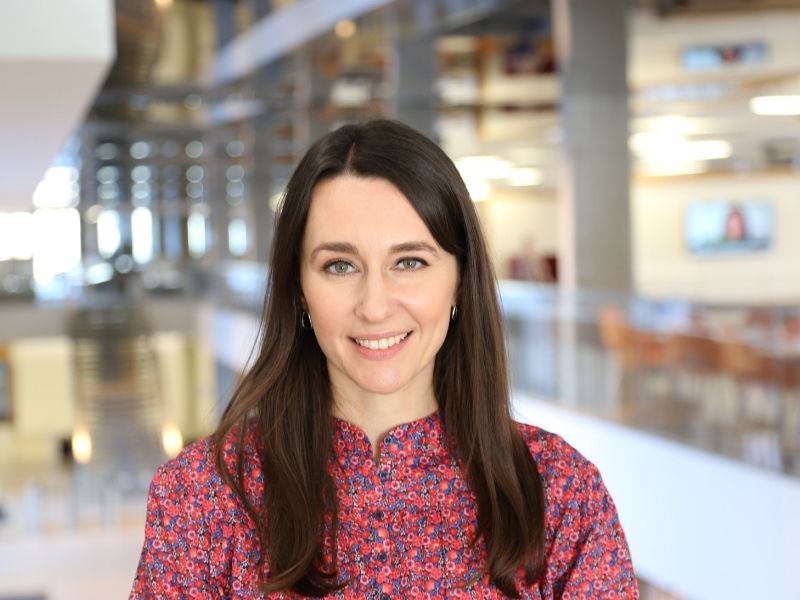
“Progress happens when knowledge and opportunity are shared”: Cambridge University Press & Assessment’s Dr Brigita Séguis on leadership and collaboration.
My professional journey has been shaped not only by my work experiences but also by the women who influenced me throughout my life. My grandmother, who played a central role in my upbringing and whose education was interrupted by the war, gave me an early awareness that opportunity is never guaranteed. That perspective shaped my own commitment to education, ultimately leading me to pursue a doctoral degree, and continues to influence how I lead today.
I place strong importance on creating environments where others are trusted and encouraged to grow. Although I lead the team, decisions about how we organise ourselves, who we hire, and which projects we pursue are shaped collaboratively. I believe teams perform best when people feel genuine ownership and have a voice in the direction we take together.
In education, progress happens when knowledge and opportunity are shared, and I believe leadership works the same way.
What does empowerment mean to you in the context of women in the workplace, and how have you seen it transform careers?
Empowerment is not simply giving people a voice; it is creating a culture where people genuinely want to use it, where individuals feel heard, valued, and confident that their contribution matters. A defining example for me came when our team was moved from one department to another. We had built a strong team identity and reputation, and there was a real concern that this would be diluted during the transition. It became a pivotal moment because I felt a strong responsibility to advocate for preserving what we had created together.
What particularly stood out to me during that time was when another colleague chose to speak up and support that effort. That moment became a turning point for her. She became far more invested in the team’s future, took on a more central role, and began actively shaping decisions rather than simply responding to them. This experience reinforced my belief that empowerment helps people rediscover purpose in their work and develop a stronger sense of confidence and ownership. When individuals feel that their voice truly matters, they begin to see themselves differently, and that shift often becomes the catalyst for further growth.
How has the support you’ve received shaped the way you lift others up today?
I feel very fortunate to have benefited from the support of highly knowledgeable and inspirational people throughout my career. Several of those who influenced me most began as my line managers but gradually became mentors, role models and friends. Some had spent twenty or even thirty years within the organisation, and the practical advice and institutional wisdom they shared with me went far beyond anything formal training could provide.
I now see part of my role as continuing that chain of knowledge and support: sharing context, institutional wisdom and informal guidance with members of my team so they feel equipped to grow and navigate their own careers with confidence. In many ways, lifting others up feels less like a leadership task and more like passing forward something that was generously shared with me by previous generations of leaders.
What practical advice would you give to women aiming for leadership roles, and how can organisations create environments where women thrive?
My first piece of advice is to recognise that leadership has no shortcuts. Becoming a leader takes time, consistent hard work, patience, and perseverance. Accepting that journey and focusing on building credibility through actions and meaningful contribution is essential.
Secondly, leadership development is shaped by the people we choose to learn from. I have found it important to surround myself with peers, mentors and role models whose actions reflect integrity and substance. Choosing carefully whose example we follow is an important part of professional growth.
Organisations should focus on creating environments where all employees can thrive, recognising that experiences, particularly around motherhood, are not one-size-fits-all. Some people want and need flexibility around family life, while others find professional engagement essential to their wellbeing and identity.
Personally, being surrounded by colleagues, having opportunities to travel for work, and continuing to grow professionally helped me reconnect with an important part of my identity and maintain my wellbeing while navigating the many emotional ups and downs that can come with motherhood. True inclusion means asking rather than assuming, and creating cultures where people are empowered to define success and levels of engagement on their own terms. When organisations give trust, flexibility and opportunity, they ultimately gain more engaged, confident and high-performing teams.
Looking back, the defining moments of my career have all been shaped by people who chose to share their knowledge, trust, and opportunities with me. Leadership, to me, is about continuing that cycle by creating environments where others feel empowered to contribute, grow and use their voice. Progress happens when each generation leaves the path a little wider for those who follow.